فارسی
- English
- Español
- Português
- русский
- Français
- 日本語
- Deutsch
- tiếng Việt
- Italiano
- Nederlands
- ภาษาไทย
- Polski
- 한국어
- Svenska
- magyar
- Malay
- বাংলা ভাষার
- Dansk
- Suomi
- हिन्दी
- Pilipino
- Türkçe
- Gaeilge
- العربية
- Indonesia
- Norsk
- تمل
- český
- ελληνικά
- український
- Javanese
- فارسی
- தமிழ்
- తెలుగు
- नेपाली
- Burmese
- български
- ລາວ
- Latine
- Қазақша
- Euskal
- Azərbaycan
- Slovenský jazyk
- Македонски
- Lietuvos
- Eesti Keel
- Română
- Slovenski
- मराठी
- Srpski језик

اخبار
چه چیزی باعث می شود یک پمپ پیستونی سرامیکی هیدرولیک با هوا خنک برای فیلتر پرس یک محلول تغذیه لجن قابل اطمینان باشد؟
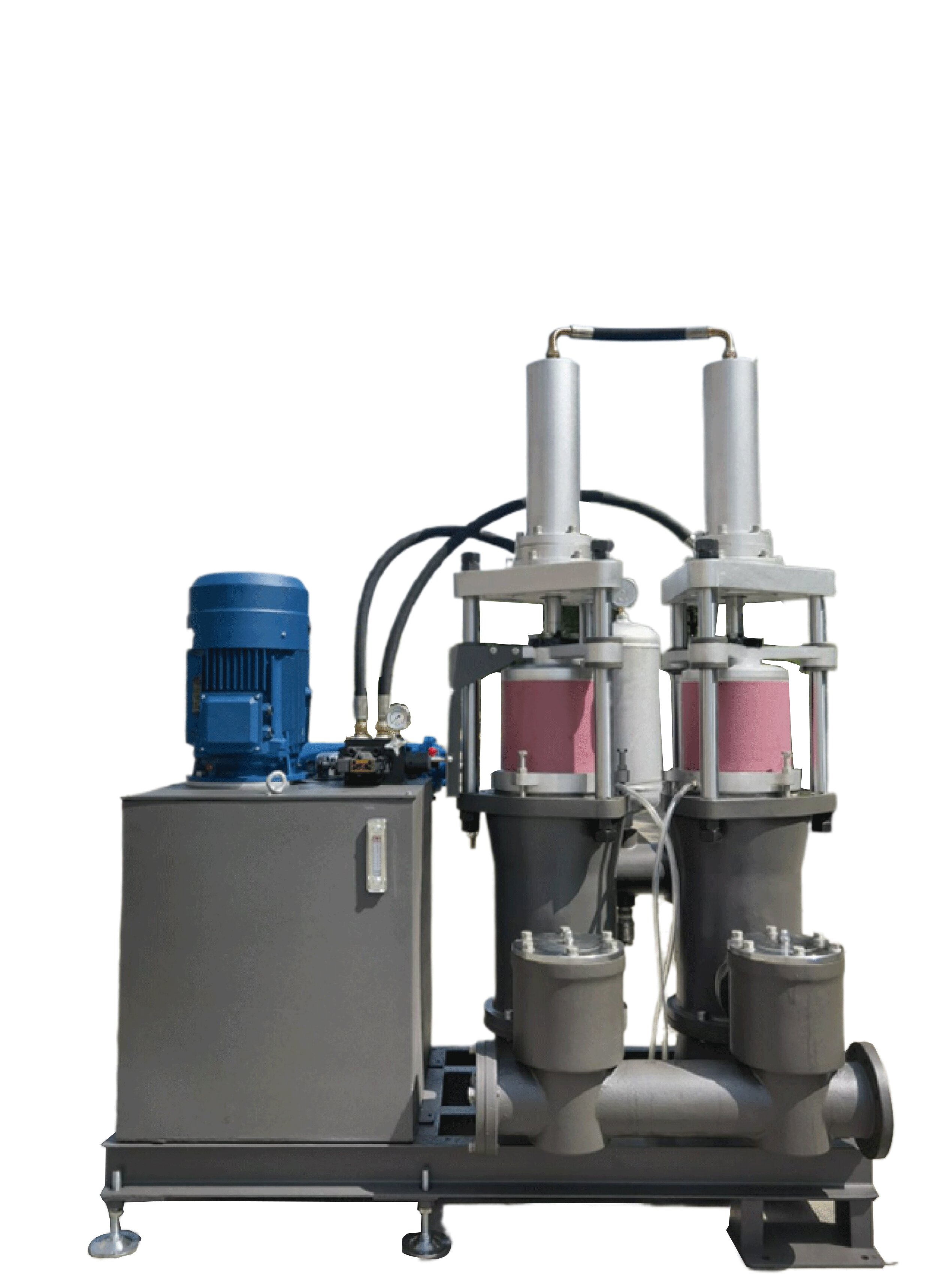
An Air Cooled Hydraulic Ceramic Piston Pump For Filter Press is designed to solve several common challenges in sludge dewatering, including unstable feeding pressure, abrasive slurry, high solid concentration, overheating, excessive maintenance, and inefficient pumping. Unlike conventional centrifugal pumps that can lose flow as filter press resistance increases, a hydraulic ceramic piston pump uses positive-displacement movement to maintain controlled material delivery. Its ceramic piston or plunger provides strong resistance to abrasion, while air cooling helps remove hydraulic heat without relying on an external cooling-water circuit. When correctly matched with the filter press, slurry characteristics, pipeline, and operating cycle, this pump can support more stable feeding, longer component life, cleaner operation, and more predictable production.

Table of Contents
- Why Filter Press Feeding Becomes Difficult
- What Is an Air Cooled Hydraulic Ceramic Piston Pump?
- How the Pump Works During a Filter Press Cycle
- Why Air Cooling Matters in Continuous Operation
- Why Ceramic Components Matter for Abrasive Slurry
- Key Benefits for Industrial Users
- Key Factors When Specifying the Pump
- Pump Type Comparison
- Maintenance Practices That Reduce Downtime
- Typical Industrial Applications
- Why Work With Zhejiang Sinou Environmental Protection Equipment Co., Ltd.
- Frequently Asked Questions
Why Filter Press Feeding Becomes Difficult
A filter press does not operate under one fixed hydraulic condition throughout its entire filtration cycle. At the beginning, the filter chambers need to be filled quickly, so a relatively high flow rate is useful. As solids accumulate on the filter cloth, resistance increases. The pump then needs to continue feeding material while handling substantially higher pressure and lower flow.
This changing operating condition is one reason why selecting a pump simply according to nominal flow rate can create problems. A pump that performs well during the initial filling stage may struggle when the filter cake becomes dense. The result can be slow cycles, incomplete chamber filling, unstable pressure, leakage, excessive component wear, or unnecessary energy consumption.
Common operating pain points include:
- High-viscosity sludge that is difficult to convey.
- Sand and mineral particles that accelerate component wear.
- Pressure fluctuations during the final filtration stage.
- Hydraulic heat accumulation during long operating periods.
- Cooling-water requirements on water-cooled equipment.
- Frequent replacement of vulnerable pump components.
- Difficulty matching pump performance with the actual filter press cycle.
What Is an Air Cooled Hydraulic Ceramic Piston Pump?
An Air Cooled Hydraulic Ceramic Piston Pump For Filter Press is a positive-displacement feeding pump designed to deliver sludge or slurry into a filter press. It combines hydraulic actuation, reciprocating piston movement, ceramic wear-resistant components, and an air-based heat dissipation system.
The hydraulic drive converts hydraulic energy into controlled reciprocating motion. As the piston moves through its working cycle, slurry is drawn into the pump chamber and then discharged toward the filter press. Because the pump is based on positive displacement, its operating behavior is fundamentally different from that of a centrifugal pump.
The ceramic component is particularly important when the pumped medium contains abrasive solids. Wastewater sludge, concrete slurry, mining residues, and industrial process sludge can contain particles that gradually wear conventional metal surfaces. Ceramic surfaces can provide a strong barrier against this type of mechanical abrasion.
| Component | Primary Function | Practical Value |
|---|---|---|
| Hydraulic drive | Provides reciprocating power | Stable high-pressure operation |
| Ceramic piston/plunger | Transfers slurry under pressure | Improved resistance to abrasive media |
| Air cooling system | Dissipates hydraulic heat | Reduces dependence on cooling water |
| Valves and seals | Control suction and discharge | Helps maintain feeding stability |
How the Pump Works During a Filter Press Cycle
The operating principle is straightforward, but its effect on the filtration process is significant. Hydraulic pressure drives the piston through repeated reciprocating strokes. During the suction stroke, slurry enters the pumping chamber. During the discharge stroke, the slurry is pushed into the filter press.
As the filter chambers gradually fill, the resistance to flow rises. The pump must therefore transition from rapid material delivery to controlled high-pressure feeding. A properly configured hydraulic piston pump can accommodate this changing demand much more effectively than a pump designed primarily for free-flowing liquid transfer.
- Initial filling: The pump delivers slurry at a relatively high flow rate to fill empty filter chambers.
- Intermediate filtration: Growing filter-cake resistance requires increasingly controlled pressure.
- Final dewatering: Flow decreases while pressure becomes more important for completing filtration.
- Cycle completion: Pump operation stops or changes according to the filter press control sequence.
This two-stage operating requirement explains why pump and filter press compatibility should be evaluated as a complete system rather than as two unrelated pieces of equipment.
Why Air Cooling Matters in Continuous Operation
Hydraulic equipment generates heat during operation, particularly when working continuously or under demanding pressure conditions. If heat is not managed effectively, excessive temperature can affect hydraulic-fluid performance, seals, hoses, valves, and other components.
An air cooled design uses airflow and heat-exchange components to release heat from the hydraulic system. One practical advantage is that it can eliminate the need for a dedicated cooling-water supply for the pump's hydraulic system. This can simplify installation in facilities where water availability is limited or where operators want to reduce water consumption.
- Less dependence on cooling water: Useful in plants where water resources are limited.
- Simplified installation: No dedicated cooling-water circulation line is required for the air-cooling function.
- Cleaner operation: Eliminates potential cooling-water leakage associated with a water-cooled circuit.
- Better operational flexibility: Suitable for industrial environments where dry heat dissipation is preferred.
Air cooling does not mean that installation conditions are irrelevant. Adequate ventilation, ambient temperature control, heat-exchanger cleanliness, and appropriate hydraulic-fluid maintenance remain important for dependable operation.
Why Ceramic Components Matter for Abrasive Slurry
Sludge is rarely a perfectly clean liquid. Depending on the source, it can contain sand, mineral particles, cement residues, metal fines, chemical solids, or other abrasive substances. When these particles repeatedly pass through a pump, they can gradually damage internal surfaces.
Ceramic piston or plunger components are designed to address this challenge. Their high hardness can provide strong resistance to mechanical wear, helping maintain dimensional stability over repeated operating cycles. This is particularly valuable for applications where replacing worn components frequently would create significant downtime.
Important: Ceramic construction improves resistance to abrasive conditions, but pump life still depends on slurry composition, particle size, concentration, pressure, operating frequency, sealing quality, and correct maintenance.
Key Benefits for Industrial Users
For industrial users, the value of an air cooled hydraulic ceramic piston pump is not limited to its ability to move sludge. Its real contribution is improving the stability and predictability of the complete filter press feeding process.
Pressure Control
Controlled positive-displacement feeding helps maintain stable pressure as filter resistance increases.
Wear Resistance
Ceramic components are well suited to slurry containing abrasive solids.
Water Reduction
Air cooling can reduce the need for a separate cooling-water circuit.
Process Stability
A properly matched pump can support more consistent filter press cycles.
Key Factors When Specifying the Pump
Purchasing teams should avoid selecting an Air Cooled Hydraulic Ceramic Piston Pump For Filter Press based only on a catalog flow rate. The pump should be specified according to the actual process.
- Slurry concentration: Higher solids content generally creates greater conveying resistance and wear.
- Particle characteristics: Particle size, hardness, and concentration affect component life.
- Required pressure: The pump must provide sufficient pressure for the filter press at the end of the cycle.
- Required flow: Initial chamber filling may require significantly more flow than final filtration.
- Pipeline design: Pipe diameter, length, bends, valves, and elevation can influence system resistance.
- Operating schedule: Continuous production places greater demands on hydraulic heat management.
- Ambient conditions: Temperature, dust, humidity, and ventilation should be considered when selecting an air-cooled system.
- Maintenance access: Valves, seals, hydraulic components, and wear parts should be accessible for inspection and replacement.
Pump Type Comparison
| Consideration | Air Cooled Ceramic Piston Pump | Centrifugal Slurry Pump | Screw Pump |
|---|---|---|---|
| High-pressure feeding | Strong suitability | Flow can decrease as resistance rises | Depends on design and operating conditions |
| Abrasive slurry | Ceramic construction supports wear resistance | Wear depends strongly on pump construction | Rotor and stator can be affected by abrasive solids |
| Filter press finishing stage | Well suited to controlled high-pressure feeding | Less suitable when resistance becomes very high | Can provide positive displacement but requires application matching |
| Cooling requirement | Air cooling | Depends on motor and pump configuration | Depends on application and pump design |
Maintenance Practices That Reduce Downtime
Even a highly wear-resistant pump requires routine inspection. Preventive maintenance is particularly important when the pump handles abrasive or chemically aggressive slurry.
- Inspect ceramic piston or plunger surfaces regularly for abnormal wear.
- Check seals for leakage, deformation, or premature deterioration.
- Monitor hydraulic-fluid condition and operating temperature.
- Keep air-cooling surfaces and ventilation passages clean.
- Inspect suction and discharge valves for blockage or abnormal wear.
- Check pipeline connections for vibration, leakage, and accumulated solids.
- Record pressure and flow changes to identify developing problems early.
- Use replacement components compatible with the original pump design.
A simple maintenance record can also help operators identify changes in slurry characteristics. If pressure begins rising unusually fast or flow decreases during a normally stable part of the cycle, the issue may originate from the pump, pipeline, filter cloth, filter cake, or upstream slurry preparation system.
Typical Industrial Applications
The combination of high-pressure positive displacement, ceramic wear resistance, and air cooling makes this pump concept relevant to many solid-liquid separation processes.
Concrete Wastewater
Handles slurry generated during concrete production and washing processes.
Handles slurry generated during concrete production and washing processes.
Municipal Wastewater
Supports sludge dewatering where reliable filter press feeding is required.
Supports sludge dewatering where reliable filter press feeding is required.
Mining
Useful for abrasive mineral-containing slurry and tailings-related processes.
Useful for abrasive mineral-containing slurry and tailings-related processes.
Chemical Processing
Can be configured for demanding industrial slurry conditions.
Can be configured for demanding industrial slurry conditions.
Printing & Dyeing
Suitable for sludge generated by industrial wastewater treatment.
Suitable for sludge generated by industrial wastewater treatment.
Industrial Solid-Liquid Separation
Helps maintain controlled feeding during filter press dewatering.
Helps maintain controlled feeding during filter press dewatering.
Why Work With Zhejiang Sinou Environmental Protection Equipment Co., Ltd.
Zhejiang Sinou Environmental Protection Equipment Co., Ltd. focuses on environmental protection equipment and solid-liquid separation solutions, including filter press systems and hydraulic ceramic piston pump technologies. Its product range addresses applications involving sludge, slurry, wastewater treatment, concrete-related wastewater, and other industrial separation processes.
For a pump application, product selection should be based on actual operating data rather than a generic model number. Important information includes the filter press type, chamber volume, required cycle time, slurry concentration, particle characteristics, expected pressure, pipeline configuration, ambient temperature, and operating schedule.
Providing these details to the manufacturer can make it easier to determine the appropriate pump configuration and supporting equipment while reducing the risk of selecting a pump that is either undersized for the application or unnecessarily oversized.
Frequently Asked Questions
1. What type of slurry can an air cooled hydraulic ceramic piston pump handle?
It is generally intended for sludge and slurry containing suspended solids, including abrasive or relatively high-concentration media. The actual suitability depends on particle size, solids concentration, chemical composition, viscosity, temperature, and required pressure. Application data should be reviewed before final selection.
2. Why is a ceramic piston useful for filter press applications?
A ceramic piston or plunger can provide strong resistance to abrasion. This is particularly valuable when the pumped material contains sand, mineral particles, cement residues, or other solids that may accelerate wear on conventional components.
3. What is the difference between air cooling and water cooling?
Air cooling removes heat through airflow and heat-exchange components, while water cooling relies on a circulating water system. Air cooling can simplify installation and reduce cooling-water requirements, although adequate ventilation and environmental conditions remain necessary.
4. Can the pump work continuously?
The suitability for continuous operation depends on the specific model, hydraulic configuration, ambient temperature, slurry characteristics, pressure, and duty cycle. For continuous industrial operation, heat management, hydraulic-fluid condition, sealing, and preventive maintenance should all be considered.
5. How should the pump be matched with a filter press?
The matching process should consider filter press capacity, chamber volume, filtration resistance, target cycle time, slurry concentration, pipeline resistance, required feeding pressure, and expected flow. The goal is to ensure that the pump can provide both the initial filling flow and the pressure required during the final filtration stage.
6. Does higher pump pressure always mean better filtration?
No. The pump must operate within the pressure limits of the filter press, filter plates, filter cloth, pipelines, valves, and other components. Excessive pressure does not automatically produce better results and can increase mechanical stress or cause process problems. Correct pressure control is more important than simply maximizing pressure.
7. What information should buyers provide when requesting a quotation?
Useful information includes the filter press model, filter plate size, chamber volume, slurry type, solids concentration, particle size, viscosity, required flow, operating pressure, pipeline length and diameter, working hours per day, ambient temperature, and any special corrosion or material requirements. More complete process data allows the manufacturer to recommend a more appropriate configuration.
Build a More Reliable Filter Press Feeding System
Choosing the right pump is ultimately about matching equipment performance with real process conditions. An air cooled hydraulic ceramic piston pump can provide a practical solution when abrasive slurry, high-pressure feeding, stable operation, and reduced cooling-water dependence are important considerations.
If you are evaluating a new filter press feeding system, replacing an inefficient slurry pump, or looking for a customized solution for demanding sludge conditions, contact us with your application data and operating requirements to discuss a suitable configuration with Zhejiang Sinou Environmental Protection Equipment Co., Ltd.
بعد:
-
اخبار مرتبط
- چه چیزی یک سیستم تصفیه فاضلاب بتن را موثر می کند؟
- اخبار صنعت: پمپ پلانجر سرامیک هیدرولیک انتقال 40 درصد لجن محتوای جامد را از راه دور حل می کند.
- چگونه یک احیاگر بتن ارتعاشی می تواند مدیریت زباله پروژه تونل را بهبود بخشد؟
- چگونه یک ماشین لباسشویی کامیون میکسر سنگین، تمیز کردن ناوگان بتنی را بهبود می بخشد؟
- تاثیر و استفاده مجدد از فاضلاب از کارخانه های بچینگ بتن
- خنثی سازی مبتنی بر CO2 - یک جایگزین امن تر برای تصفیه فاضلاب قلیایی در کارخانه های بچینگ بتن
برای من پیام بگذارید
محصولات جدید



توصیه های خبری